THE TASTE OF INDIA
The Amul Advertising Campaign: A Comprehensive Case Study in Brand Longevity, Cultural Satire, and Media Economics
Detailed Analysis of Topical Advertising Strategy and its Role as India's Cultural Chronicler (1966–Present)
Abstract
This comprehensive report delves into the enduring success of the Amul advertising campaign, a phenomenon that has transcended product marketing to become an institutionalized form of social commentary in India for over six decades. The core mechanism is the Topical Advertising Strategy, centered on the unchanging mascot, the Amul Girl, who provides witty, pun-filled commentary on national and global events. The report establishes that the campaign's longevity is rooted in a meticulously executed creative process that prioritizes immediacy, playful satire, and visual consistency, granting the brand a unique social license to engage with sensitive issues without incurring controversy. The analysis extensively documents the campaign's evolution, detailing its foundation in the dairy co-operative model, the rapid creative workflow, and its seamless transition from traditional Out-of-Home (OOH) media to viral digital content. Crucially, the campaign is analyzed through the lens of Earned Media Economics, demonstrating how Amul maximizes cultural impact at minimal direct advertising cost, securing its status as a masterclass in resilient brand management and positioning the Amul Girl as the nation's beloved, non-partisan cultural chronicler.
Keywords: Topical Advertising, Brand Longevity, Amul Girl, Earned Media Economics, Cultural Satire, Creative Process, Indian Co-operative Model.
Table of Contents
- Introduction: The Phenomenon of Topical Advertising
- Strategic Foundation and Methodology
- The Co-operative Identity and Brand Trust
- The Birth of an Icon: Utterly Butterly Breakthrough (1966)
- The Four Pillars of Creative Genius
- The Rapid Creative Vetting Process
- Campaign Analysis: Case Studies Across Indian Culture
- Political Commentary: The Shield of Innocence (The Emergency, GST)
- National Unity: Sports and National Pride (Cricket Triumphs)
- The Bollywood Bridge: Cinema and Celebrity Culture
- Digital Agility: Mastering Pop Culture and Memes (Pawri Hori Hai)
- Media Evolution and Economic Impact
- From Billboards to Bytes: The Digital Transition
- The Economics of Earned Media and ROI
- The Linguistic Factor: The Power of Hinglish and Puns
- Chronology and Long-Term Value Creation
- Conclusion and Future Implications
1. Introduction: The Phenomenon of Topical Advertising
The Amul advertising campaign represents a unique case study in global marketing, defying conventional rules that dictate brand communication must remain strictly separate from sensitive current affairs. Since its inception in the mid-1960s, the Gujarat Co-operative Milk Marketing Federation (GCMMF) has utilized its most visible brand—Amul butter—to deliver sharp, witty, and timely commentary on everything from political corruption and economic liberalization to scientific achievements and celebrity gossip. This highly granular approach to topical advertising has secured Amul an emotional connection with consumers that transcends simple product quality or price point.
The campaign’s longevity, now exceeding five decades, is unparalleled globally. It functions as a de-facto cultural history book, meticulously documenting the unfolding narrative of modern India. The success is not accidental but is built upon a high-stakes, meticulously managed creative strategy that prioritizes immediacy—responding to a national event within hours—and deploying a playful, non-malicious tone. This synthesis of artistic discipline and strategic agility allows the brand to maintain its relevance across multiple generations, securing its status as the Voice of the Nation.
2. Strategic Foundation and Methodology
2.a. The Co-operative Identity and Brand Trust
Amul's brand credibility is intrinsically linked to its operational structure. Founded by Dr. Verghese Kurien (The Milkman of India), the brand is a dairy co-operative owned by millions of farmers, embodying themes of national self-reliance, rural empowerment, and quality control. This foundational identity provides the ethical and moral high ground that legitimizes the brand’s participation in social discourse. The public perception of Amul as a farmer-owned, national institution—rather than a profit-driven multinational corporation—is crucial, as it buffers the brand against potential backlash when addressing sensitive topics. The consumer views the Amul Girl's commentary not as corporate propaganda, but as a genuine, innocent reflection of the collective public mood. This deeply embedded trust is the bedrock upon which the highly visible topical campaign rests.
2.b. The Birth of an Icon: Utterly Butterly Breakthrough (1966)
The campaign’s genesis in 1966 was a calculated response to the market dominance of competitor Polson butter. Polson’s brand image was elite and aspirational. Dr. Kurien sought a communication strategy that was both cost-effective and inherently relatable to the common Indian family, especially in the context of a co-operative. Creative director Sylvester da Cunha and art director Eustace Fernandes of advertising agency ASP (later Da Cunha Communications) were tasked with creating this affordable, memorable icon.
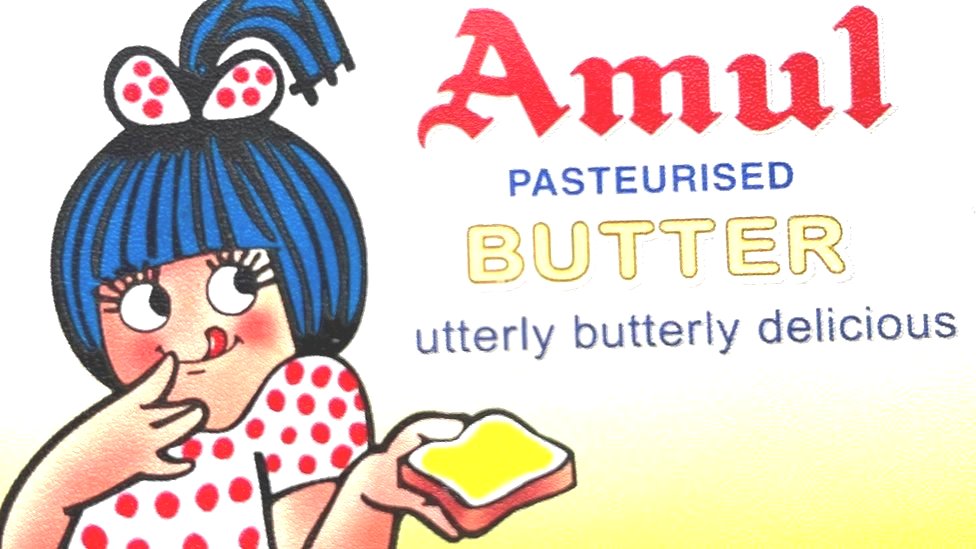
They conceived the Amul Girl, a cheerful, polka-dotted mascot. The initial strategic decision was to appeal directly to children, recognizing them as powerful influencers of household purchases. They paired the mascot with the brilliantly crafted slogan, "Utterly Butterly Delicious," a piece of phonetic wordplay that became inseparable from the brand's identity. The key evolutionary step was pivoting the mascot's role from simply promoting butter quality to acting as a running commentator on public life, securing a social license afforded by her seemingly innocent, childlike perspective.
2.c. The Four Pillars of Creative Genius
Amul's formula is built on strategic consistency and tactical spontaneity. These four pillars ensure the campaign’s ongoing success across all media platforms.
Real-Time Topicality (Immediacy)
This is the core operational driver. Ads are created and published within hours—sometimes less than four hours—of a major news break. This extreme speed defines the brand as the ultimate Moment Marketer, guaranteeing the message is often the first, most memorable, and most highly shared public commentary on an event.
The Genius of Puns (Hinglish Factor)
The linguistic strategy is unique: every headline must feature a clever, multilingual pun (often Hinglish, a blend of Hindi and English) that twists the topic using 'butter' or 'Amul'. This wordplay ensures the message is witty, relatable across India's language barriers, and consistently ties the ad back to the product's name/identity.
Visual & Tonal Consistency (Nostalgia)
The hand-drawn aesthetic and the Amul Girl's design have remained largely unchanged since the 1960s. This deliberate constancy builds familiarity, deep intergenerational trust, and powerful nostalgia, positioning the brand as a dependable constant in India's constantly changing social and economic landscape.
Satire Without Malice (Social License)
The brand maintains a strictly light, non-judgemental tone. The Amul Girl avoids taking political sides, never attacks individuals, and focuses solely on observing the event. This editorial constraint is the foundation of the brand's unique social license, allowing it to comment on controversies without alienating any consumer segment.
2.d. The Rapid Creative Vetting Process
The operational success relies on an agile, high-trust client-agency process. The creative team at Da Cunha Communications operates under a standing order for continuous surveillance of the news cycle. Once a significant national event occurs, the entire process—ideation, illustration, pun finalization, and client approval (often by the GCMMF Managing Director)—is condensed into a mere few hours. This is achieved through a high-trust model where the agency has almost complete creative autonomy, provided the non-malicious tone is strictly adhered to. This commitment to speed over exhaustive, multi-layered corporate bureaucracy is what makes the campaign impactful, often beating traditional news commentary to the punch and positioning Amul as the definitive, timely voice on the subject.
The core constraints—a small visual canvas and mandatory integration of the word 'butter' or 'Amul' into the pun—paradoxically increase the creative output's effectiveness. The limited scope forces the creative team to be extremely succinct and clever, ensuring the message is instantly understood and universally appreciated.
3. Campaign Analysis: Case Studies Across Indian Culture
The campaign’s versatility is best demonstrated through its commentary on India's most unifying forces: politics, sports, and cinema. The analysis below highlights the depth of engagement across these spheres.
3.a. Political Commentary: The Shield of Innocence

Case: The 1976 Indian Emergency
The ad: "We have always practised compulsory sterilization," with the Amul Girl dressed as a doctor. The brilliance lies in using the dual meaning of "sterilization" (referring to butter purity and the controversial government policy). This was a daring, almost subversive act of political commentary during a period of strict media censorship. The innocence of the Amul Girl provided a critical layer of plausible deniability, allowing the brand to speak truth to power where mainstream media could not. This cemented Amul's reputation for courage and relevance at a pivotal moment in Indian democracy.
Case: GST and Economic Reform
When the Goods and Services Tax (GST) was implemented, Amul responded with "Good Sense of Tax!" This commentary shows Amul’s dedication to major policy changes that affect national trade and economic life. By simplifying complex, often controversial, economic reforms into a lighthearted endorsement, Amul helps normalize and humanize major national projects, ensuring the brand remains intertwined with the country's economic narrative and development.
3.b. National Unity: Sports and National Pride
/afaqs/media/post_attachments/36f6b0d1b26fcdd8485b521b5f15473da21ad44fb11b959a7c71efef05aadd0b.jpg)
Case: The 1983 Cricket World Cup Victory
The ad: "Kapi Kapil Ki!" This immediate and clever response to the historic win under Kapil Dev instantly associated the brand with collective national joy. Cricket is India's most unifying factor, and Amul quickly established itself as the nation's unofficial congratulatory messenger. This strategic move linked the simple act of consuming butter to feelings of shared success, building deep emotional equity and transforming the brand into a cultural partner in moments of national triumph and unity.
Case: Olympic and Global Sports Triumphs
Amul consistently covers major Olympic and sports achievements, from individual Gold medals to Hockey World Cups. This strategy aligns Amul with the positive, aspirational goals of the nation. Unlike politics, sports commentary is entirely safe and universally loved, providing a reliable source of feel-good content that reinforces the brand's image as a supporter of national talent and pride without the risk of public alienation.
3.c. The Bollywood Bridge: Cinema and Celebrity Culture

Case: Referencing Controversial Entertainment (AIB Roast)
The ad: "Roast? Don't roast your toast!" This campaign referenced the highly controversial AIB Knockout roast. By choosing to comment on the topic of 'roasting' rather than the moral/ethical controversy surrounding the event, Amul successfully engaged with a trending cultural phenomenon while maintaining its safe, lighthearted boundary. This demonstrates masterful control over brand tonality, engaging with edgy content while remaining firmly family-friendly and relatable to all consumer segments.
Case: Movie Releases and Celebrity Weddings
Amul systematically covers major movie releases, celebrity weddings, and notable entertainment events. This ensures continuous relevance and shareability, as cinema and celebrity culture are primary conversation drivers across all demographics in India. By integrating its mascot into the narratives of film posters and popular scenes, Amul keeps the Amul Girl's face fresh in the public eye without having to pay for costly celebrity endorsements, maximizing efficiency and visibility.
3.d. Digital Agility: Mastering Pop Culture and Memes

Case: The Viral 'Pawri Hori Hai' Meme
The ad: "Yeh humari pav tea ho rahi hai." This lightning-fast response to a fleeting digital meme proved Amul’s commitment to modern digital culture. Translating a Gen Z trend into their timeless cartoon format showed exceptional digital agility. This not only kept the brand "cool" but ensured the content was widely shared by youth, effectively recruiting a new generation of consumers who saw Amul as a contemporary, aware brand that speaks their language.
Implications for Digital Longevity
Amul's ability to consistently adapt the format (from hoarding to square digital post) and the subject matter (from political policy to TikTok trends) ensures it avoids the fate of many long-running campaigns that become relics. The digital platform provides the final, essential layer of immediacy that maximizes the campaign's ROI through instantaneous, viral sharing across borders and demographics.
4. Media Evolution and Economic Impact
4.a. From Billboards to Bytes: The Digital Transition
The campaign’s transition from Out-of-Home (OOH) media—physical billboards—to digital platforms (Twitter, Instagram) was seamless because the fundamental creative constraints (small canvas, punchy text, iconic image) were already optimized for rapid consumption. The physical hoardings, placed prominently in high-traffic areas, initially secured the brand's visibility. The shift to digital media amplified this visibility exponentially, creating a continuous feedback loop: the ad is posted digitally, picked up by news media and influencers, and then often installed on physical hoardings, creating a dual-media hit for a single creative effort.
The digital platforms also provided a new strategic advantage: direct consumer engagement. Amul uses social media not only to post the topicals but also to share product information, recipes, and respond to consumer queries, diversifying its digital presence beyond mere satire to integrate inspirational and functional content, promoting the entire Amul dairy product portfolio and reinforcing the brand's utility in the modern Indian kitchen.
4.b. The Economics of Earned Media and ROI
Amul’s campaign is an elite model of Earned Media Economics. The financial return on investment (ROI) is staggering. Because the content is considered newsworthy and culturally relevant, it is published and shared freely by virtually every media house in India, including major newspapers, television channels, and online news portals. This constant, high-value exposure would cost millions of dollars if purchased as traditional advertising space. Instead, Amul secures this exposure through the minimal cost of operating its small, dedicated creative team, translating into exceptional media efficiency.
The value of this sustained, positive media presence is incalculable. It reinforces brand loyalty, serves as a powerful barrier against competitive threats, and consistently elevates the brand's cultural capital above simple functional benefits (like butter taste), linking it instead to feelings of national pride, wit, and reliability. This mechanism positions the campaign as primarily a Public Relations and Image Building effort that indirectly drives high product sales and long-term brand equity.
4.c. The Linguistic Factor: The Power of Hinglish and Puns
The sophisticated use of Hinglish (the pervasive blending of Hindi and English) in the puns is a core mechanism for national relevance. In a country with over 22 official languages, the subtle combination of English terms with Hindi phonetic elements ensures maximum comprehension across diverse linguistic regions. For example, twisting a term like "Butter" to create "Bhattar" (referencing a family name or a pun on a Hindi word) makes the ad instantly accessible, witty, and deeply localized, providing a moment of shared national understanding through language. This linguistic agility is vital for bridging the gap between urban and regional consumers, enhancing the campaign's universal appeal and making it truly "The Taste of India."
5. Chronology and Long-Term Value Creation
The table below provides a condensed chronology of key Amul topical milestones, demonstrating the range and evolution of the commentary across five decades, illustrating the brand's commitment to chronicling Indian history in real-time.
| Year | Topic / Event | Iconic Pun / Tagline | Significance / Impact |
|---|---|---|---|
| 1966 | Launch, Initial Slogan | Utterly Butterly Delicious | Establishes the mascot and the phonetic wordplay signature. |
| 1976 | Indian Emergency / Sterilization Policy | We have always practised compulsory sterilization. | Defines the brand as courageous and non-partisan; secures social license. |
| 1983 | Cricket World Cup Victory | Kapi Kapil Ki! | Links the brand to national pride and emotional mass consumption. |
| 1991 | Economic Liberalization (LPG Reforms) | Amul: It’s the liberal butter on the top. | Engages with complex economic policy, normalizing major national changes. |
| 1999 | Kargil War | Been There, Done That, Won That. | Demonstrates immediate response during periods of national crisis/conflict. |
| 2017 | Goods and Services Tax (GST) Implementation | Good Sense of Tax! | Reiterates commitment to national economic discourse and simplifies policy. |
| 2021 | Pawri Hori Hai Meme (Viral Trend) | Yeh humari pav tea ho rahi hai. | Showcases digital agility and continuous relevance to Gen Z audiences. |
| Ongoing | Trolling and Social Media Battles | Amul: The best defense against online vitriol is a good buttered toast. | Maintains neutral, lighthearted stance in an increasingly polarized digital environment. |
Long-Term Value Creation: The Brand as Cultural Asset
The sustained longevity of the campaign means the Amul Girl is not merely an advertising asset; she is a deeply entrenched cultural artifact. This creates a powerful moat around the Amul brand. Competitors cannot easily replicate this goodwill, as it has been accumulated over decades of consistent, trusted commentary. This cultural capital translates into pricing power, market resilience, and robust brand trust that insulates the core product line from commodity competition and price wars. The campaign ultimately transforms a low-involvement purchase (butter) into a high-involvement brand experience tied to national identity and shared cultural memory, a feat unmatched in global marketing.
6. Conclusion and Future Implications
The Amul advertising campaign is more than a marketing strategy; it is a profound sociological phenomenon. It functions as an institutionalized practice of public relations and collective social commentary, with the Amul Girl serving as a shared, friendly reference point for the complex, unfolding narrative of India. The campaign's survival is owed to the rigorous, high-speed creative methodology and the strategic maintenance of a non-malicious, observational tone, which together have built an almost unbreakable bond of public trust.
The ultimate lesson for global branding is the power of authenticity and constraint. By operating within its identity as a farmer-owned co-operative and strictly adhering to its visual and tonal boundaries, Amul built an asset more valuable than any product: deep, enduring cultural relevance and public trust. As India's digital and political landscapes continue to evolve rapidly, the Amul Girl will continue her role as the nation's beloved chronicler, ensuring that Amul remains, in both taste and conversation, The Taste of India.
Comments
Post a Comment